How to Prevent Lily Pollen from Staining Furniture
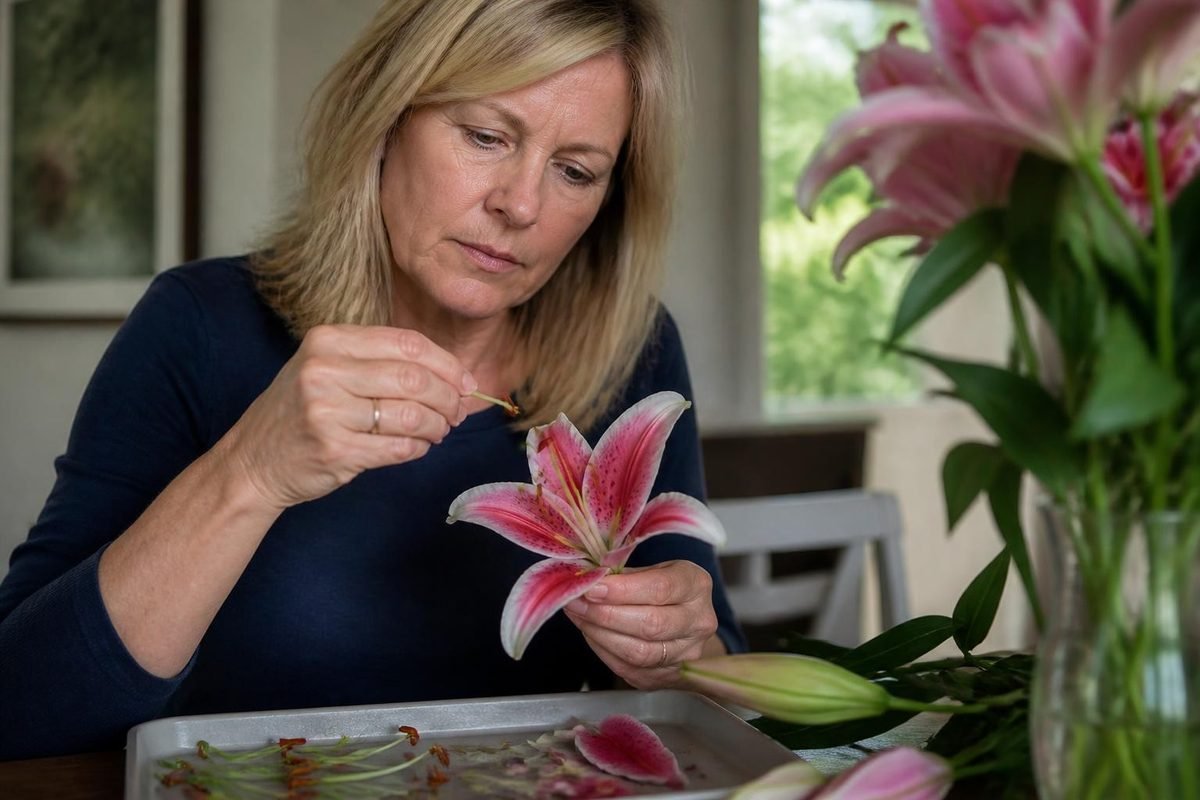
Remove the pollen bearing anthers from lilies as soon as the flowers open, before the powder has a chance to fall onto furniture. Place the vase away from busy edges and handle any fallen pollen dry, without rubbing it into the surface.
Remove the anthers early
Look inside an open lily and you will see several slender filaments around the center. Each one has an anther at its tip, where the dusty pollen develops. The anthers are easiest to remove before they release much powder, so check the flowers as soon as their petals begin to open.
Gently pinch each anther off with your fingers or use a tissue to hold it. You can also use small scissors, taking care not to cut the petals. Drop the anthers straight into a bin rather than setting them on a table. If pollen gets on your fingers, wash your hands before touching upholstery or other household surfaces.
Keep checking the arrangement as more buds open. A quick look each day helps you catch anthers that were hidden inside closed flowers.
Choose a safer spot for the vase
Set your lilies on a stable surface where they are unlikely to be brushed by sleeves, bags or passing hands. Give the flowers enough room that their open faces do not hang over a sofa or chair. A vase near a walkway can be knocked or nudged, scattering pollen farther than you might expect.
For extra protection, place a washable cloth or tray beneath the vase. It can catch pollen that drops near the stems, although it will not protect fabric beyond its edges. Avoid placing lilies close to a fan or an open window where moving air could carry loose pollen.
Handle fallen pollen without rubbing
If you spot pollen on furniture, try to lift the loose powder before treating the area. Rubbing can push it deeper into fabric, and adding water at the start can make the mark harder to remove.
- Use the sticky side of clear tape to lift loose pollen from fabric, pressing lightly and using a fresh piece as needed.
- On a hard surface, lift the loose powder carefully with tape or a dry cloth, without wiping it across the finish.
- If a mark remains on upholstery, check the care label and consider a professional cleaner, especially for delicate fabric.
Test any cleaning method on an inconspicuous area first. Furniture fabrics and finishes vary, and even gentle handling may affect a delicate surface.
Care for the flowers as they open
Remove fading blooms carefully so loose pollen stays away from the furniture. Hold a tissue beneath the flower as you work, then put the bloom and tissue in the bin. Keep the vase steady and check the surrounding surface afterward.
You do not need to remove the whole flower to reduce the risk of pollen stains. Taking off the anthers leaves the petals in place for you to enjoy.
Questions about lily pollen
Can unopened lilies release pollen?
Check buds as they open. The anthers inside can become exposed and shed pollen once the petals part.
Should you wet a pollen stain?
Start by lifting loose pollen dry. Water can make the mark harder to remove if powder is still present.
Will a tray catch every grain?
No. A tray protects the area directly beneath the vase, but pollen can fall or travel beyond it.
See also: All Saints' Day in Poland